Direct Thermal vs Thermal Transfer Printers: Which One Is Right for Your Business?
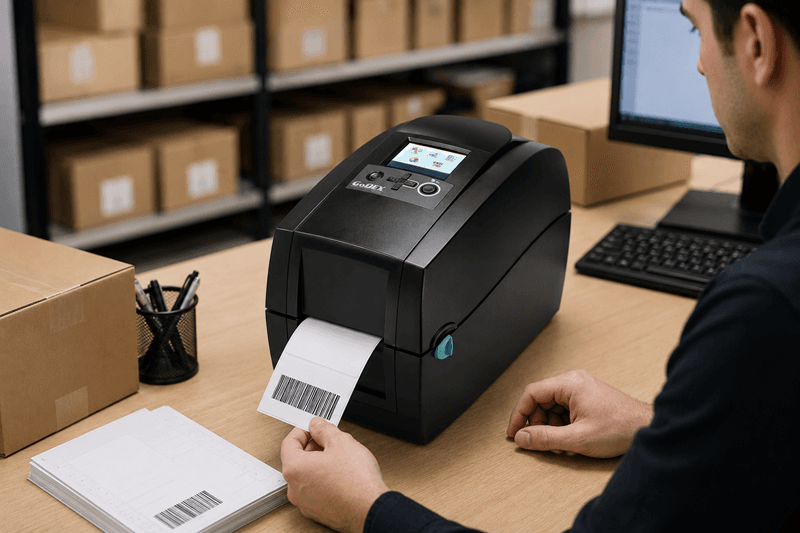
Barcode labeling has become an essential component of modern business operations. From warehouses and manufacturing facilities to retail stores and healthcare organizations, businesses rely on barcode labels to improve inventory accuracy, streamline workflows, and enhance product traceability. When selecting a barcode label printer, one of the most important decisions is choosing between direct thermal and thermal transfer printing technologies.
Although both printing methods utilize thermal technology, they serve different purposes and offer distinct advantages. Understanding how each technology works and where it performs best can help businesses select the most effective barcode printing solution for their operational requirements.
Understanding Thermal Printing Technology
Thermal printing technology has become one of the most reliable and cost-effective methods for producing barcode labels. Unlike traditional printers that require ink cartridges or toner, thermal printers use heat to create text, graphics, and barcodes on labels. This approach simplifies maintenance while delivering consistent print quality and high-speed performance.
The two most widely used thermal printing technologies are direct thermal printing and thermal transfer printing. While both methods generate labels using heat, the way they produce printed images differs significantly.
What Is a Direct Thermal Printer?
A direct thermal printer creates labels by applying heat directly to specially coated thermal label material. When the printhead generates heat, the surface of the label reacts and forms the required image, barcode, or text. Since this process does not require a ribbon, direct thermal printing is often considered a simple and economical labeling solution.
Businesses that require high-volume label printing for short-term applications frequently choose direct thermal printers due to their ease of use and lower operating costs. These printers are commonly found in shipping centers, retail environments, transportation services, and ticketing operations.
Because direct thermal labels are sensitive to heat, sunlight, and environmental exposure, they are generally best suited for applications where labels are not expected to remain in use for extended periods.
What Is a Thermal Transfer Printer?
A thermal transfer printer uses a ribbon to transfer ink onto the label surface through heat. During the printing process, the printhead heats the ribbon, allowing the ink to bond permanently with the label material. This method creates highly durable labels capable of withstanding harsh environmental conditions.
A thermal transfer barcode printer is often the preferred choice for businesses that require long-lasting labels with exceptional readability and durability. These printers support a wide range of label materials, including paper and synthetic media, making them suitable for demanding industrial environments.
Thermal transfer printing is widely used in manufacturing, healthcare, logistics, warehousing, pharmaceuticals, and asset tracking applications where label longevity is critical.
Comparing Print Durability and Performance
One of the most significant differences between direct thermal and thermal transfer printers is label durability. Direct thermal labels provide excellent print quality but can gradually fade when exposed to sunlight, heat, chemicals, or prolonged storage conditions. As a result, they are typically recommended for temporary applications.
Thermal transfer labels offer superior resistance to environmental factors and maintain their quality for much longer periods. They can withstand moisture, abrasion, chemicals, and temperature fluctuations without compromising barcode readability. For businesses requiring permanent identification labels, thermal transfer printing is often the more reliable option.
Both technologies provide sharp barcode printing and fast performance. However, thermal transfer printing generally delivers greater flexibility and durability across a wider range of applications.
Cost Considerations
Cost is an important factor when selecting a barcode printing solution. Direct thermal printers often have lower operating costs because they do not require ribbons. This reduces consumable expenses and simplifies printer maintenance.
Thermal transfer printers require ribbons in addition to labels, which increases operating costs slightly. However, many organizations view this additional expense as a worthwhile investment because of the increased label lifespan and durability.
Businesses should evaluate not only the initial operating costs but also the total cost of ownership. Replacing faded or damaged labels can become costly over time, particularly in industrial environments where accurate identification is essential.
Industry Applications for Direct Thermal Printing
Direct thermal printing is commonly used in industries where labels have a relatively short lifespan. Shipping companies rely on direct thermal labels for package tracking and delivery operations. Retail businesses use direct thermal printers for receipts, shelf labels, and temporary product identification.
Transportation companies, event organizers, and logistics providers also benefit from direct thermal technology because it offers fast printing speeds and efficient label production. For short-term applications, direct thermal printing remains one of the most practical and cost-effective solutions available.
Industry Applications for Thermal Transfer Printing
Thermal transfer printing is ideal for businesses that require labels capable of lasting months or even years. Manufacturing facilities use thermal transfer labels to track products throughout production and distribution processes. Healthcare organizations depend on durable labels for specimen identification, medical records, and pharmaceutical packaging.
Warehouses and distribution centers frequently utilize thermal transfer printing for inventory management and asset tracking. Industrial organizations also rely on this technology for compliance labels, equipment tags, and safety identification systems that must remain readable in challenging environments.
The versatility and durability of thermal transfer printing make it a preferred choice for industrial label printing applications worldwide.
How to Choose the Right Barcode Printer
Choosing the right barcode label printer depends on several factors, including label lifespan, environmental conditions, printing volume, and material requirements. Businesses that require temporary labels and lower operating costs may benefit from direct thermal printing technology.
Organizations operating in demanding environments or requiring long-lasting labels should consider investing in a thermal transfer printer. The ability to print on various materials and maintain label quality over extended periods often provides greater value in industrial applications.
Before making a purchase decision, it is important to assess operational needs and future growth requirements. Selecting the appropriate printing technology can improve efficiency, reduce replacement costs, and support long-term business objectives.
Conclusion
Understanding the differences between direct thermal and thermal transfer printers is essential when selecting a barcode printing solution. While direct thermal printers offer simplicity and cost efficiency for short-term applications, thermal transfer printers provide superior durability and long-term performance for demanding environments.
Businesses should evaluate their labeling requirements carefully to determine which technology best aligns with their operational goals. Whether you need temporary shipping labels or durable industrial identification labels, choosing the right barcode printer can significantly improve productivity, accuracy, and overall business performance.
FAQ’s
Q1. What is the main difference between direct thermal and thermal transfer printers?
The primary difference is that direct thermal printers print directly onto heat-sensitive labels without using a ribbon, while thermal transfer printers use a ribbon to transfer ink onto the label surface for increased durability.
Q2. Which printer is better for long-lasting barcode labels?
Thermal transfer printers are generally better for long-lasting barcode labels because they offer greater resistance to moisture, chemicals, abrasion, and environmental conditions.
Q3. Do direct thermal printers require ribbons?
No. Direct thermal printers do not require ribbons, ink cartridges, or toner. They use heat-sensitive label materials to create printed images.
Q4. Are thermal transfer printers suitable for industrial environments?
Yes. Thermal transfer barcode printers are widely used in manufacturing, warehousing, logistics, healthcare, and other industrial applications where durable labels are required.
Q5. How long do thermal transfer labels last?
Depending on the label material and environmental conditions, thermal transfer labels can remain readable for several years while maintaining barcode quality and durability.